



Waking up to a deep, nagging ache along your rib cage is unsettling. For a moment, your mind jumps to the worst-case scenarios — your heart, your lungs, something serious. But take a breath. In the overwhelming majority of cases, morning rib pain isn’t a sign of internal disease. It’s mechanical. It’s postural. And more often than not, it traces back to how — and what — you sleep on.
This guide walks through what’s likely causing the soreness, the red flags that warrant a doctor’s visit, and the practical fixes you can try tonight. By the end, you’ll have a clear sense of where the discomfort is coming from and what to do about it.
Is Morning Rib Pain Something to Worry About?
The rib cage is a busy piece of anatomy. It houses dozens of small muscles (the intercostals), connects to cartilage at the sternum, and sits on top of a spine that moves with every breath. Any of those structures can become irritated, inflamed, or fatigued — and the most common time you’ll notice it is when you first wake up and try to move.
That said, there are a few symptoms that should never be brushed off. Seek medical attention right away if your rib pain comes with:
- Chest tightness, pressure, or shortness of breath
- Pain radiating into your arm, neck, or jaw
- Fever, chills, or coughing up blood
- Sudden, severe, or rapidly worsening pain
If none of those apply, you’re almost certainly dealing with something the rest of this article can help you sort out.
The Most Common Reasons Your Ribs Hurt in the Morning
Your Sleep Position
How you sleep determines where your body weight lands for six to nine hours straight. That’s a long time for any one spot to bear pressure.
- Side sleepers concentrate weight on the down-side shoulder and rib cage. If the mattress doesn’t yield enough, the ribs press into a hard surface all night long. You’ll usually feel it most on the side you slept on.
- Stomach sleepers flatten their entire torso into the mattress and rotate their neck to breathe. This compresses the rib cage from front to back and can strain the upper rib joints.
- Back sleepers generally have the easiest time with rib alignment, but a sagging mattress can cause the lumbar spine to drop, creating referred pain that radiates up into the lower ribs.
A quick self-check: does the pain match the side you sleep on? If yes, your position (and the surface beneath you) is almost certainly part of the problem.
Your Mattress Isn’t Supporting You Properly
A mattress that doesn’t match your body creates pressure points all night.
- Too firm: The surface won’t accommodate the natural curves of your shoulders and hips. Instead of cushioning, it pushes back, leaving the rib cage under constant pressure.
- Too soft: Heavier areas — hips, midsection, shoulders — sink too far. Your spine bows unnaturally and the ribs twist out of alignment along with it.
- Worn out: Most mattresses lose meaningful support somewhere between year seven and year ten. Visible indentations, sagging edges, or lumps disrupt alignment and create new pressure points where the surface has collapsed.
Three signs your mattress is the culprit:
- The pain is worst in the first hour after waking and fades as you move
- The soreness is localized to the side you sleep on
- You can see or feel a dip when you lie down on the bed
If any of those ring true, the mattress is doing more harm than the sleep position itself.
Pillow Height and Neck Alignment
This one surprises people. A pillow that’s too tall or too flat tilts your head out of alignment with your spine. The strain doesn’t stop at your neck — it travels down through the upper back and into the intercostal muscles between your ribs. You wake up with what feels like rib pain, but the original sin happened six inches higher.
Your pillow should fill the gap between your neck and the mattress so your head stays level with the rest of your spine. Side sleepers generally need a thicker pillow than back sleepers because the gap is bigger.
Recent Injury or Muscle Strain
A bruised or strained intercostal muscle from coughing fits, a tough workout, a minor fall, or even prolonged poor posture can take weeks to fully heal. Why does the pain feel worst in the morning? Because inflammation settles and muscles stiffen overnight when you’re not moving. The first few movements of the day stretch tissue that’s been still for hours, and that’s when the soreness announces itself.
Costochondritis and Other Inflammation
Costochondritis is inflammation of the cartilage that connects your ribs to your sternum. It produces sharp pain in the front of the chest that’s often mistaken for a heart problem. The giveaway: it worsens with movement, deep breaths, or pressing on the affected area — none of which is typical of cardiac pain. It’s a common, benign condition, though it can take weeks to settle down.
Underlying Medical Conditions
Several chronic conditions can express themselves as morning rib pain or discomfort:
- Fibromyalgia — widespread tender points across the body, including the chest wall, often worst in the morning
- Arthritis (including ankylosing spondylitis) — morning stiffness is a hallmark, and inflammation can affect the joints where ribs meet the spine
- GERD and acid reflux — lying flat lets stomach acid travel into the esophagus, producing burning sensations that are often felt as rib or chest pain
- Anxiety and chronic stress — sustained tension in the intercostal muscles plus shallow breathing patterns can leave the rib cage sore even without any physical injury
If your rib pain comes with other symptoms (heartburn, joint stiffness elsewhere, panic episodes), an underlying cause may be in play.
Pregnancy and Hormonal Changes
Pregnancy reshapes the rib cage. The expanding uterus pushes the lower ribs outward, and pregnancy hormones loosen ligaments throughout the body. Add in the fact that comfortable sleep positions become harder to find, and rib soreness in the second and third trimesters is extremely common. It usually resolves within weeks of delivery.
How Sleep Position and Mattress Firmness Work Together
There’s no universal “best” mattress firmness — only the right firmness for your body and sleep style.
- Side sleepers typically do best on medium to medium-soft surfaces that let the shoulder and hip sink in just enough to keep the spine straight from neck to tailbone.
- Stomach sleepers need medium-firm support to prevent the midsection from sinking and arching the lower back.
- Back sleepers generally do well on medium-firm to firm mattresses that hold the lumbar curve without letting the pelvis drop.
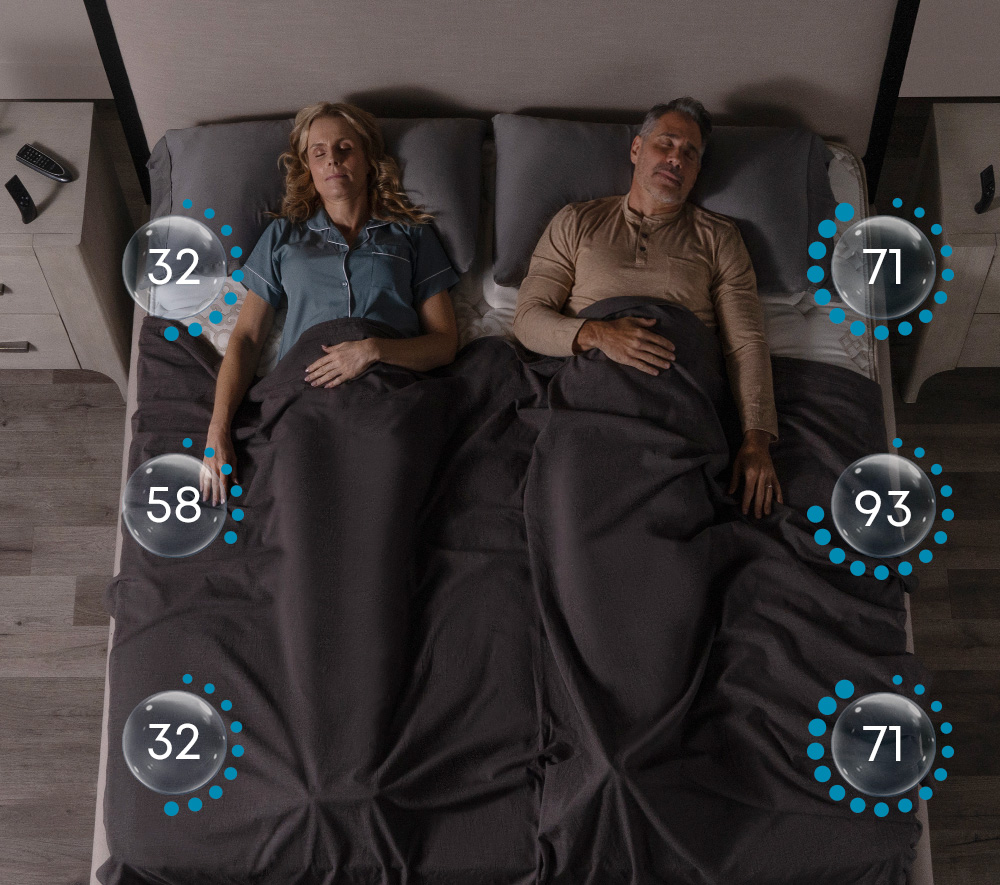
This is exactly where zoned support changes the game. Instead of one firmness from head to toe, a zoned mattress is softer under the shoulders and hips (where you need cushioning) and firmer under the lumbar region (where you need alignment). The rib cage stays neutral all night because the surface beneath it actually matches what your body is doing.
If you sleep on your side, this matters even more — the best mattress for side sleepers is one that lets your shoulder settle in without compressing the ribs.
How to Stop Waking Up with Rib Pain
Adjust Your Sleep Position
Small changes to how you set up your body for sleep can take significant load off the rib cage.
- Side sleepers: Put a pillow between your knees to keep your hips aligned, and hug a body pillow to stabilize the top shoulder so it doesn’t roll forward and torque the rib cage.
- Stomach sleepers: Use the thinnest pillow you can tolerate — or none at all — and start gradually transitioning to side sleeping, which is much kinder to the ribs and lower back.
- Back sleepers: Place a small pillow under your knees to flatten the lumbar curve and take pressure off the lower spine.
Upgrade or Replace Your Mattress
If your mattress is more than seven to ten years old, sagging visibly, or leaving you worse off in the morning than when you went to bed, it’s working against you. Look for a surface that offers zoned support, real pressure relief at the shoulders and hips, and full-body alignment from head to feet. An orthopedic mattress designed around zoned firmness is one of the most effective fixes for chronic morning soreness.
Try an Adjustable Base
An adjustable bed lets you elevate your upper body and legs into what’s often called the “zero-gravity” position. This distributes body weight evenly, reduces pressure on the spine and rib cage, and takes strain off the lower back. It’s particularly helpful for people dealing with GERD (elevation keeps stomach acid where it belongs), pregnancy, or recovery from a recent strain.
Fix Your Pillow Setup
A good pillow does one thing: it keeps your head level with your spine. If you’re a side sleeper, that usually means something on the thicker, firmer side to fill the gap created by your shoulder. If you’re a back sleeper, a thinner pillow keeps your neck from craning forward. The right pillow eliminates a surprising amount of upper-rib and shoulder soreness.
Stretch and Move in the Morning
Five minutes of gentle movement reverses most overnight stiffness. A few options that work the rib cage and surrounding muscles:
- Cat-cow on hands and knees
- Doorway chest stretch
- Gentle side bends with arms overhead
- Slow, deep diaphragmatic breaths
You don’t need a routine. You just need to move before you ask your body to do anything demanding.
Address Underlying Causes
If a chronic condition is feeding into the rib pain, the mattress and pillow changes will help — but they won’t fix the root issue alone.
- GERD: Avoid eating within three hours of bed, and elevate the head of your bed by four to six inches
- Anxiety: Breathing exercises, especially before sleep, reduce overnight muscle tension
- Active injury: Rest, ice, and OTC anti-inflammatories where appropriate; give the tissue time to heal
When to See a Doctor
Most morning rib pain resolves with the changes described above. But it’s worth checking in with a physician if:
- The pain has lasted more than two weeks without improving
- You have breathing difficulty, fever, or unexplained weight loss
- The pain is sudden, sharp, or steadily getting worse
- Any cardiac or pulmonary red flag from the opening section applies
There’s no downside to getting evaluated. If it’s nothing serious, you’ll have peace of mind. If it is something, you’ve caught it early.
Frequently Asked Questions
Why do my ribs hurt only on one side when I wake up? The most likely explanation is the side you sleep on. Concentrated pressure on the down-side ribs all night long produces localized soreness on exactly one side.
Can a bad mattress really cause rib pain? Yes — and it’s one of the most overlooked causes. An overly firm, overly soft, or worn-out mattress disrupts spinal alignment and concentrates pressure on the rib cage for hours at a time.
Why do my ribs hurt when I sleep on my side? Side sleeping puts your body weight directly on the shoulder and ribs. Without enough cushioning beneath, the ribs press into a hard surface. The fix is usually a more conforming surface and a pillow setup that keeps your top shoulder stable.
How long does costochondritis last? It varies. Most cases resolve within a few weeks, but some can linger for several months. Movement, anti-inflammatories, and avoiding the activities that aggravate it typically speed recovery.
Can anxiety cause rib pain in the morning? Yes. Chronic muscle tension in the chest wall, shallow breathing patterns, and stress-induced shoulder posture can all leave the ribs feeling sore on waking.
Should I sleep on my back if my ribs hurt? For many people, yes. Back sleeping distributes weight more evenly and takes direct pressure off the rib cage. Pair it with a small pillow under the knees and a properly sized pillow under the head.
The Takeaway
The vast majority of morning rib pain isn’t a warning sign — it’s feedback. Feedback that your sleep position, your mattress, your pillow, or some combination of the three isn’t doing its job. Adjust the inputs, and the output usually takes care of itself.
If you’ve tried the position and pillow fixes and the soreness is still there, the surface underneath you is the most likely remaining culprit. A zoned-support mattress that cushions your shoulders and hips while keeping your lumbar spine aligned is one of the most effective interventions for chronic morning discomfort — and one of the most overlooked.
Explore the best mattress for side sleepers or browse orthopedic mattress options to see what zoned support actually feels like.


Experience a new degree of personalized sleep.


Find the Airpedic® that’s just right for your sleep needs.

Buy with monthly payments.
Get an Airpedic Mattress starting as low as $84/mo
or interest-free.
Read More About Healthy Sleep
The Myth of the Universal Mattress Walk into almost any mattress showroom and you’ll be asked the same question: “Do you prefer soft, medium, or firm?” The assumption baked into that question — and into most mattresses on the market — is that a single firmness level should work from…
View More
Call one of our sleep experts to place an order.
Business Hours
- Monday - Friday 8:00am - 6:00pm PST
- Saturday - Sunday 10:00am - 6:00pm PST