




Best Mattress for Fibromyalgia: Top Picks for Chronic Pain Relief in 2026
If you have fibromyalgia, you already know the equation: a bad night in bed turns into a worse day out of it. Pain fragments your sleep, and shallow, broken sleep cranks up your pain sensitivity the next morning. The cycle feeds itself, and the surface you spend a third of your life on is either helping break it or quietly making it worse.
The trouble is that most “best mattress” lists aren’t written with a fibromyalgia sufferer in mind. They optimize for generic back pain, or for couples who disagree on firmness, or for hot sleepers. Those readers have real problems, but they aren’t your problems. You need pressure relief that doesn’t create new tender points, support that adapts to pain that changes location week to week, and temperature control that accounts for night sweats and medication side effects.
This guide is built specifically for chronic pain. Below you’ll find what to actually look for in a mattress when you live with fibromyalgia, seven mattresses worth considering (ranked, with honest tradeoffs), and the role an adjustable base plays in amplifying relief. By the end you’ll have a clear shortlist and a framework for deciding.
How Fibromyalgia Disrupts Sleep — The Pain-Sleeplessness Cycle
Fibromyalgia and sleep are locked in a feedback loop that researchers call the pain-sleeplessness cycle, and understanding it is the first step to choosing a mattress that can interrupt it.
Here’s how the loop works. Pain and tender-point sensitivity pull you out of deep, restorative sleep stages all night long — you might not even remember waking, but the architecture of your sleep is shredded. Poor deep sleep means your body doesn’t produce the growth hormone and other chemicals it needs to repair muscle tissue and regulate pain signaling. The next morning, your pain threshold is lower, your stiffness is worse, and your sensitivity to pressure is amplified. That heightened pain then disrupts the following night’s sleep even more aggressively. Repeat.
One of the most overlooked drivers of this cycle is static positioning. When a fibromyalgia sufferer stays in one position too long — which happens on any mattress that doesn’t allow easy repositioning — blood pools, muscles stiffen, and tender points flare. You wake up not because you were uncomfortable in the moment, but because your body has been begging you to move for the last twenty minutes. A mattress with strong pressure relief lets you stay comfortable longer in any given position, and one that’s easy to shift on lets you reposition without fully waking up.
Layer on temperature sensitivity — which affects the majority of fibromyalgia patients — plus the night sweats that come with many common medications, and a mattress that traps heat becomes a third source of wake-ups on top of the pain itself.
Your mattress is one of the few variables in fibromyalgia management that you fully control. You can’t always control a flare. You can control where you land when it hits.
What to Look for in a Mattress for Fibromyalgia
Not every feature marketed to pain sufferers actually matters for fibromyalgia. These are the seven that do, roughly in order of importance.
Pressure relief for sensitive tender points. Fibromyalgia’s hallmark is heightened pressure sensitivity at specific points — shoulders, hips, knees, elbows. A mattress that distributes your weight evenly across its surface dramatically reduces the load on those points. Memory foam, latex, and air chambers with plush comfort layers all do this well when designed correctly. A too-firm innerspring pushes back into those tender zones and makes them worse.
Adjustable firmness for fluctuating pain. This is the feature most lists miss. Fibromyalgia pain changes — daily, sometimes hourly. Some nights you need a cloud; other nights a soft surface makes your hips ache because your spine sinks out of alignment. A fixed-firmness mattress forces you to compromise on the nights you need the opposite of what you bought. Adjustable air mattresses solve this by letting you dial firmness up or down on demand.
Spinal alignment and zoned support. Good pressure relief without good alignment is a trap. When a mattress cradles your shoulders and hips too aggressively, your midsection sinks into what’s called the “hammock effect,” twisting your lumbar and creating exactly the muscle tension you’re trying to avoid. Zoned support — firmer under the lumbar, softer under shoulders and legs — keeps your spine’s natural curve intact while still relieving pressure where it matters. Proper spinal alignment is what separates a mattress that delivers pain relief from one that trades one pain for another.
Temperature regulation. Cooling gel-infused foam, active airflow channels, breathable covers, and phase-change materials all help. Dense traditional memory foam is the worst offender for trapping heat.
Motion isolation. If you share a bed, every shift your partner makes is a potential wake-up. Air chambers and memory foam both isolate motion well; innersprings generally don’t.
Edge support and ease of entry and exit. On a flare day, getting out of bed is a project. A mattress with reinforced edges gives you something stable to lean on as you swing your legs over — small thing, huge difference.
Trial period and warranty. Your body needs time — often three to six weeks — to adjust to a new sleep surface. A 30-day trial isn’t enough. Look for 100 nights minimum. A long warranty matters too, because a mattress that sags in year four undoes everything you’re paying for in year one.
Joint pain, chronic pain, and broken sleep all respond to the same set of mattress features. Get these seven right and you’ve solved most of the equation.
Best Mattresses for Fibromyalgia — Our Top Picks
The picks below were evaluated against the seven criteria above, with extra weight on adjustability and pressure relief — the two features that most directly interrupt the pain-sleeplessness cycle. Each entry includes who it suits, what stands out, tradeoffs to know about, and an approximate price tier.
#1 Best Overall: Airpedic 1200
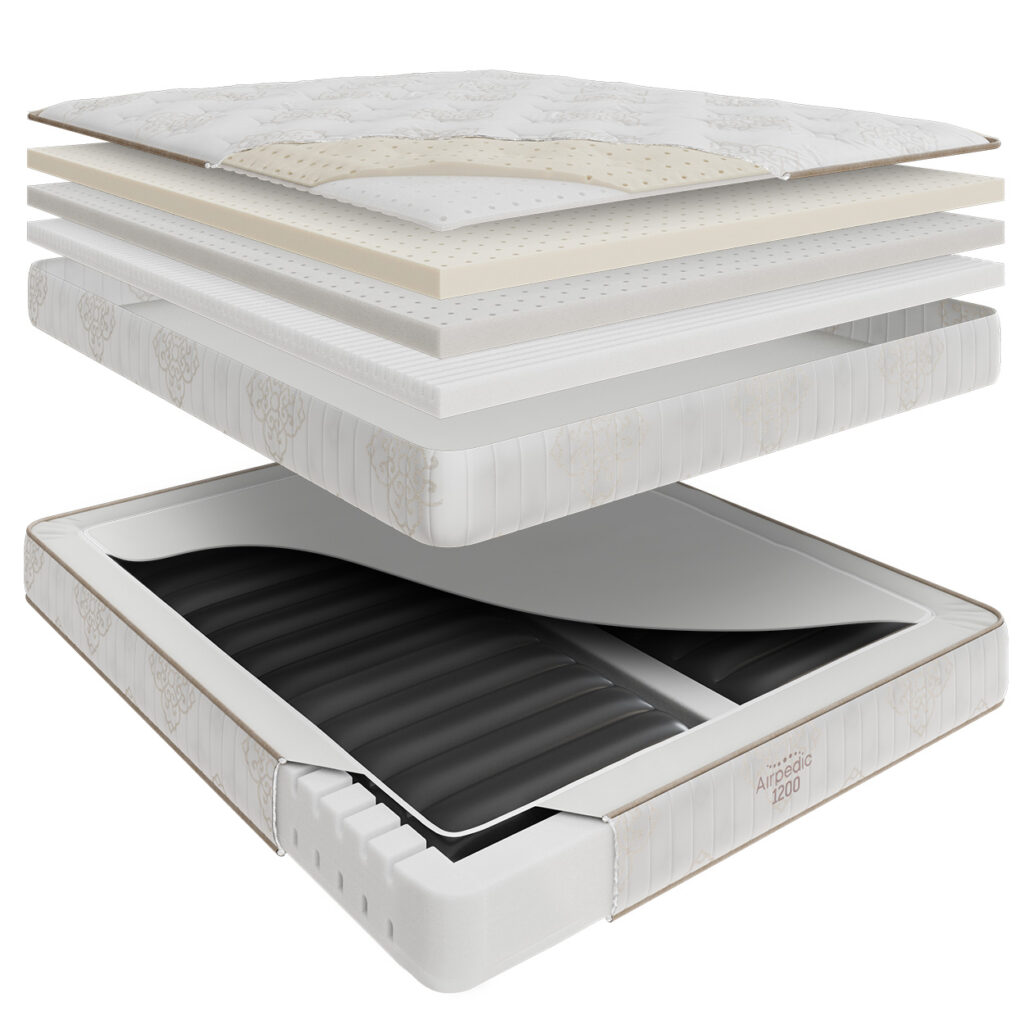
The Airpedic 1200 is the flagship of Airpedic’s adjustable-air lineup and earns the top spot because it’s the most fibromyalgia-specific mattress we’ve tested. Three features do the heavy lifting.
First, the patented 6-chamber multi-zone technology. Most mattresses — even premium ones — offer uniform support across the whole surface. The 1200 has three independent air zones on each side of the bed: shoulders, lumbar, and legs. That means you can soften the shoulder zone for pressure relief while keeping the lumbar zone firmer to prevent the hammock effect. Your partner can do the complete opposite on their side.
Second, the Super Plush comfort profile. This top layer combines cooling gel memory foam and natural latex to cradle tender points without the quicksand feel of traditional memory foam. Weight distributes evenly, and your pressure points don’t get the localized loading that triggers a flare.
Third, the patented Airflow Transfer System. Surface holes and underlying channels actively move body heat out of the mattress and circulate cooler air through it. If you run hot or deal with medication-related night sweats, this is a meaningful upgrade over any dense foam system.
Best for: Severe or fluctuating fibromyalgia pain, hot sleepers, couples with different pain profiles. Firmness / mattress type: Adjustable air (infinite range), Super Plush profile. Tradeoffs: Premium price tier. Takes a few weeks of small nightly adjustments to dial in your ideal settings. Price tier: Premium.
#2 Best for Customizable Support: Airpedic 1100
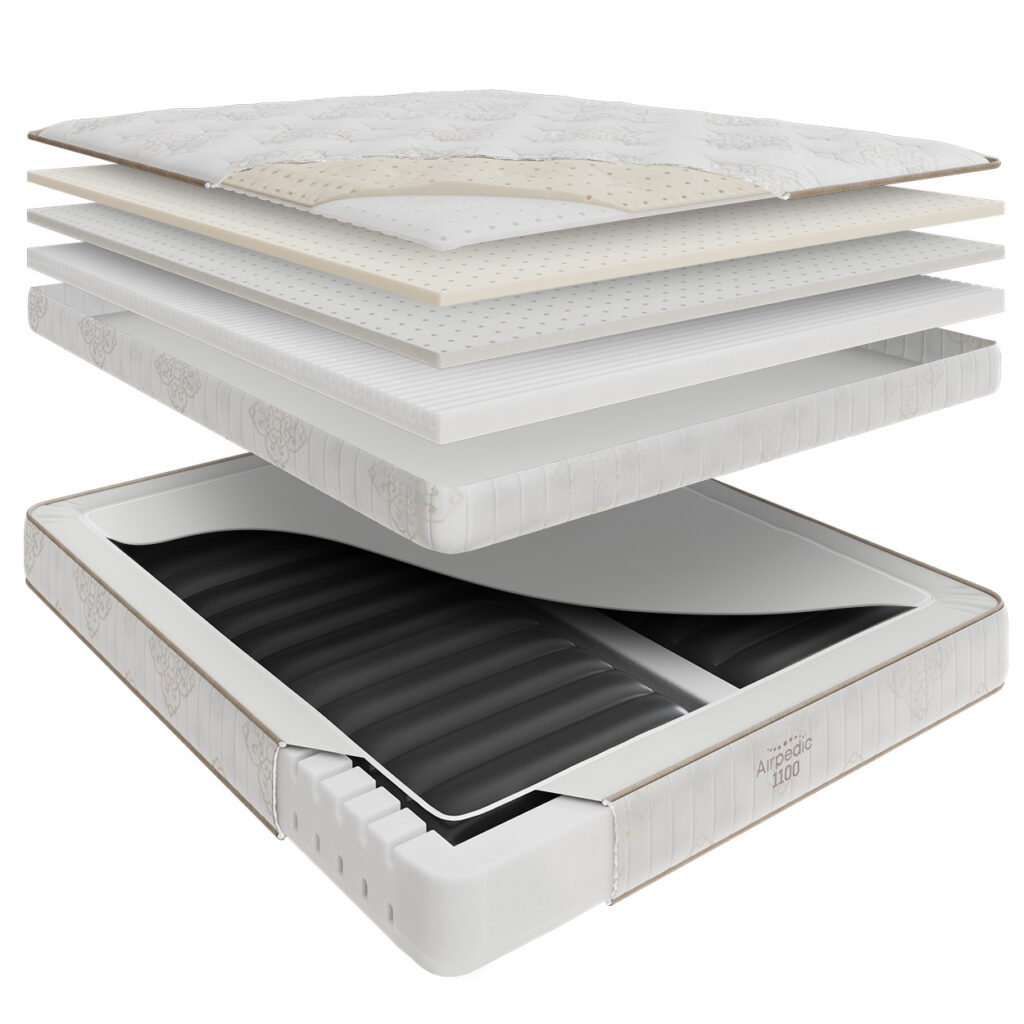
The 1100 is the 1200’s slightly less loaded sibling, and for many fibromyalgia sufferers it’s the smarter buy. You still get the 6-chamber multi-zone adjustability and the Airflow Transfer System — the two features that matter most for chronic pain. The comfort profile steps down to Luxury Plush, which is still deeply pressure-relieving for the vast majority of sleepers.
The dual-side adjustability is the unsung hero here for couples. If one partner has fibromyalgia and the other doesn’t, trying to agree on a single firmness is a losing game. The 1100 lets each person set their own firmness and zone profile without any compromise.
Best for: Couples with mismatched pain profiles, sleepers who want premium adjustability at a slightly lower price. Firmness / mattress type: Adjustable air, Luxury Plush profile. Tradeoffs: Slightly less plush top layer than the 1200. Still a significant investment. Price tier: Premium.
#3 Best Mid-Range Pressure Relief: Airpedic 1000
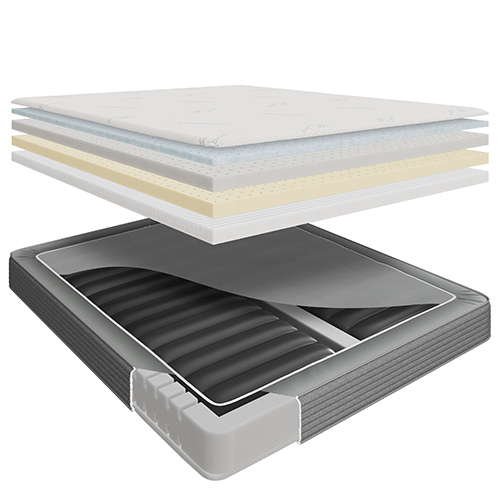
The 1000 is the entry point into Airpedic’s adjustable air lineup and the most accessible pick for readers who want true adjustability without a flagship price tag. You get the same 6-chamber architecture and adjustability, with a Luxury Plush profile built around cooling gel memory foam. For fibromyalgia sufferers on a tighter budget, this is the model to start with.
Best for: First-time adjustable air buyers, budget-conscious fibromyalgia sufferers who still want zoned support. Firmness / mattress type: Adjustable air, Luxury Plush profile with cooling gel memory foam. Tradeoffs: Thinner comfort layer than the 1100 and 1200. Still well above a standard mid-range mattress in pressure relief. Price tier: Mid-range to upper mid-range.
#4 Memory Foam Mattress
If you’re set on a traditional memory foam mattress, look for one with gel infusion, open-cell construction, or a hybrid memory foam/latex comfort layer — anything that addresses memory foam’s main weakness, which is heat retention. A mid-density memory foam around 4 to 5 pounds per cubic foot offers the best balance of pressure relief and responsiveness; anything denser tends to sleep hot and makes repositioning harder, which is a real problem for fibromyalgia sufferers who need to shift often.
Best for: Sleepers who love the contouring hug of memory foam and don’t run especially hot. Tradeoffs: Even the best cooling memory foam runs warmer than air or latex. No adjustability, so you’re locked into one firmness. Price tier: Varies widely; expect $1,200–$2,500 for a quality queen.
#5 Hybrid Mattress
A hybrid mattress pairs an innerspring coil base with a memory foam or latex comfort layer. The appeal for fibromyalgia is that you get the pressure relief of foam on top with the bounce and easier repositioning of coils underneath — helpful if you feel stuck in pure memory foam. Look for individually wrapped coils (for motion isolation) and a comfort layer at least 3 inches thick.
Best for: Sleepers who want contouring but find memory foam too sinking. Tradeoffs: Less pressure relief than an all-foam or adjustable-air option. Coils can transmit more motion than air chambers. Price tier: Mid-range; $1,500–$3,000 for quality hybrids.
#6 Latex Mattress
Natural latex mattresses offer responsive, buoyant support with cooling properties built in — latex breathes far better than memory foam. The feel is different from foam: less of a hug, more of a lift. For fibromyalgia sufferers who find memory foam too confining but still need real pressure relief, latex is the middle path. Look for Dunlop or Talalay latex, and avoid synthetic latex blends, which lose the breathability advantage.
Best for: Hot sleepers who want pressure relief without the sink, allergy-sensitive sleepers. Tradeoffs: Heavy (hard to move), expensive, and the responsive feel isn’t for everyone. Price tier: Premium; $2,000–$4,000 for an all-latex queen.
#7 Mattress Topper
If you’re not ready to replace your mattress, a high-quality mattress topper can extend the life of a current bed that’s close to right but not quite there. A 3-inch gel memory foam or latex topper can meaningfully improve pressure relief on a too-firm mattress. A topper cannot fix a sagging mattress, a mattress that’s too soft and lets your spine collapse, or a mattress that sleeps hot — in those cases you’re better off putting the topper money toward a full replacement.
Best for: Bridge solution, or making a guest room bed tolerable during a flare visit. Tradeoffs: A topper is a patch, not a cure. The underlying mattress still sets your alignment. Price tier: $200–$600.
Mattress Types Compared for Fibromyalgia
Zooming out across mattress types, here’s how they stack up specifically for fibromyalgia:
- Adjustable air (Airpedic and similar): Top choice. Only type that lets firmness change as pain changes. Excellent pressure relief, zoned support, strong motion isolation, and typically the best temperature regulation when paired with an active airflow system.
- Memory foam: Strong pressure relief and motion isolation, but runs hot unless actively cooled, and the fixed firmness forces compromises on bad nights.
- Hybrid: Good middle ground — pressure relief on top, easier repositioning from the coils. Temperature tends to be better than pure memory foam. Motion isolation is moderate.
- Latex: Excellent cooling and responsive support, decent pressure relief. Less contouring than foam, which some fibromyalgia sufferers prefer and others don’t.
- Innerspring: Generally the wrong choice. Pressure points are poorly managed, motion transfer is high, and the firm mattress feel that innersprings default to tends to aggravate rather than relieve tender-point pain.
A note on firmness myths. A common assumption is that a firm mattress is better for pain — it’s actually the opposite for fibromyalgia. Firm surfaces concentrate pressure on tender points rather than distributing it. What fibromyalgia sufferers actually need is a medium or medium-soft feel with firm underlying support — the exact combination that zoned adjustable air delivers by design.
Sleeping Position Matters Too
Your mattress choice should reflect how you actually sleep, not how you think you should. A few guidelines:
Side sleeping is generally the most fibromyalgia-friendly position, especially with a pillow between the knees to keep the hips and lower spine aligned. It reduces pressure on the lower back and keeps the airway open. Side sleepers need softer comfort layers to accommodate the shoulder and hip — a too-firm mattress creates pressure points exactly where fibromyalgia already has them.
Back sleeping is a close second, particularly with slight leg elevation (a wedge pillow or adjustable base). This takes pressure off the lumbar spine and improves circulation. Back sleepers need medium firmness with strong lumbar support to prevent the hammock effect.
Stomach sleeping tends to aggravate fibromyalgia symptoms. It twists the neck to one side for hours and puts the lower back into hyperextension. If you’re a dedicated stomach sleeper, a firmer surface reduces the extension, but transitioning toward side sleeping — gradually, with pillow props — is worth the effort.
Match your mattress to your dominant position. A side sleeper on a too-firm mattress, or a back sleeper on a too-soft one, will fight the mattress every night regardless of how premium it is.
Why an Adjustable Base Amplifies Relief
Pairing a high-quality mattress with an adjustable base — like Airpedic’s RestFlex series — is the single highest-leverage upgrade most fibromyalgia sufferers haven’t made.
The Zero Gravity position is the main attraction. Inspired by the posture NASA designed for astronauts during liftoff, it elevates your head and knees slightly above your heart, distributing your body weight across the mattress’s entire surface and taking pressure off your spine and joints. Many users describe it as the closest thing to weightlessness they’ve felt horizontal.
Leg elevation more generally promotes circulation, reduces swelling, and can ease the numbness and tingling that often accompany fibromyalgia. Elevating the head slightly helps with reflux and breathing, two common complications of chronic pain medications.
And then there’s the practical piece: motorized positioning makes getting in and out of bed far easier on flare days. Raising the head to 30 or 40 degrees turns sitting up from a painful muscle contraction into a button press. For partners and caregivers, that’s a quality-of-life upgrade that’s hard to overstate.
Beyond the Mattress — Small Changes That Help
Your mattress is the foundation, but a few adjacent changes compound its benefits:
- Pillow matched to your sleep position. Side sleepers need a thicker pillow to fill the gap between shoulder and ear; back sleepers need thinner. The wrong pillow undoes the alignment work your mattress is doing.
- Bedroom temperature between 65 and 68°F. This range is consistently linked to the best sleep architecture, and it’s especially important if you run warm or experience night sweats.
- Consistent sleep schedule. Even on rough nights, keeping your wake time steady stabilizes your circadian rhythm, which in turn helps regulate pain perception.
- Gentle pre-bed stretching. Five to ten minutes of light mobility work reduces the stiffness that builds up overnight.
- Talk to your doctor about sleep-specific symptoms. If you have signs of sleep apnea, restless legs, or medication side effects that disrupt sleep, treating those directly often does more than any mattress can.
Frequently Asked Questions
Is a firm or soft mattress better for fibromyalgia? Neither extreme works well. Fibromyalgia sufferers generally do best with a medium-soft comfort layer (for pressure relief on tender points) over firm underlying support (for spinal alignment). Adjustable air mattresses sidestep the question entirely by letting you change firmness as needed.
How long before a new mattress reduces my pain? Allow three to six weeks. Your body needs time to adjust to any new sleep surface, and fibromyalgia sufferers often feel worse for the first one to two weeks before improvement kicks in. This is exactly why a long trial period — 100 nights or more — matters so much.
Can a mattress topper fix a bad mattress for fibromyalgia? Sometimes. A topper can improve pressure relief on a mattress that’s too firm, but it cannot fix sagging, a mattress that’s too soft, or heat issues. If your mattress is more than eight years old or visibly sagging, a topper is a temporary patch at best.
Does insurance cover a mattress for chronic pain? Rarely, and not in the way most people hope. Standard health insurance doesn’t cover mattresses. In some cases, an FSA or HSA can be used if you have a Letter of Medical Necessity from your doctor specifying a therapeutic mattress. Some adjustable bases also qualify. Check with your plan administrator before assuming either way.
What firmness works when partners have different pain levels? This is exactly where dual-side adjustable air mattresses earn their price tag. Each partner sets their own firmness and zone profile independently on their half of the mattress. Without that feature, couples usually compromise on a medium mattress that doesn’t fully work for either.
The Bottom Line
The non-negotiables for a fibromyalgia mattress come down to four things: adjustability for changing pain, pressure relief for tender points, temperature regulation for night sweats and sensitivity, and a trial period long enough to actually tell whether it’s working.
The Airpedic lineup — led by the 1200, with the 1100 and 1000 as strong alternatives — is the only setup we’ve evaluated that checks every box by design rather than by compromise. The 6-chamber multi-zone adjustability, the Airflow Transfer System, the 120-night trial, and the 20-year limited warranty aren’t separate features so much as one coherent answer to the pain-sleeplessness cycle.
Fibromyalgia is a long game. The mattress you sleep on for the next decade deserves more than a 30-day gamble on a generic pick.


Experience a new degree of personalized sleep.


Find the Airpedic® that’s just right for your sleep needs.

Buy with monthly payments.
Get an Airpedic Mattress starting as low as $84/mo
or interest-free.
Read More About Healthy Sleep
As shoulder pain sufferers know all too well, shoulder pain doesn’t stop when the sun goes down. On the contrary, it can continue and even worsen during the night, causing frequent awakenings and disruption of the natural sleep cycle. The resulting discomfort and restlessness can have a profound impact on…

You’ve been lying there for 30 minutes. You flip to your left side. Then your right. You readjust your pillow, kick one leg out from under the covers, and stare at the ceiling. Sound familiar? If you find yourself endlessly hunting for “the right spot” every night, you’re not alone…
View More
Call one of our sleep experts to place an order.
Business Hours
- Monday - Friday 8:00am - 6:00pm PST
- Saturday - Sunday 10:00am - 6:00pm PST