




The Science Behind Deep Sleep: How Mattress Support Affects Sleep Stages
Every night, your body cycles through distinct sleep stages—and deep sleep is where real restoration happens. During these slow-wave phases, your muscles repair, your immune system strengthens, and your brain consolidates memories. Yet many people struggle to reach and maintain deep sleep, often without realizing that their mattress plays a central role.
In this article, we explore the science connecting mattress support to sleep quality. You will learn how proper spinal alignment, customizable firmness, and temperature regulation create the conditions your body needs for uninterrupted, restorative sleep. As a leader in adjustable air bed technology and orthopedic sleep systems, Airpedic has spent years refining the connection between support and deep sleep—and that expertise informs everything you will read here.
What Is Deep Sleep (and Why Mattress Support Matters)
Sleep unfolds in cycles, each lasting roughly 90 minutes. Within each cycle, you progress through light sleep, deep sleep (also called slow-wave sleep), and REM sleep. Deep sleep is the most physically restorative stage. Brain activity slows dramatically, heart rate drops, and the body releases growth hormones that repair tissue and strengthen the immune system. Memory consolidation also begins during these slow-wave phases, helping you retain what you learned during the day.
The challenge is that deep sleep is fragile. Physical discomfort, even at a subconscious level, can pull you back into lighter stages or cause brief awakenings you may not remember. When your mattress fails to support your body properly, tension accumulates in your muscles, pressure points develop at your hips and shoulders, and your spine drifts out of alignment. Your nervous system registers this discomfort, triggering micro-arousals that fragment your sleep architecture and reduce the time you spend in restorative stages.
This is why mattress support matters so much. A supportive sleep surface keeps your body relaxed and properly aligned, allowing your nervous system to stay calm. When tension is minimized and pressure is distributed evenly, your body can transition smoothly into deep sleep and remain there longer. The result is more complete recovery, better energy levels, and improved cognitive function during the day.
How Spinal Alignment and Orthopedic Support Influence Sleep Quality
Your spine has a natural S-curve that must be maintained while you sleep. When a mattress lacks adequate support—particularly in the midsection where body weight concentrates—your hips sink too deeply, creating what sleep experts call the “hammock effect.” This unnatural curvature strains muscles and ligaments, leading to morning stiffness, neck pain, and chronic back discomfort.
Traditional single-chamber air beds often cause this problem. Because they use one air chamber across the entire sleep surface, firmness cannot be adjusted regionally. When you add air to support your lower back, the area under your shoulders becomes too firm. When you release air for shoulder comfort, your lumbar region sinks. This trade-off makes it nearly impossible to achieve proper spinal alignment.
Firmness and Sleep Position
The firmness you need depends largely on how you sleep. Back sleepers generally require medium-firm support to prevent the lower back from sinking while keeping the spine neutral. Side sleepers need a softer surface at the shoulders and hips to accommodate their curves while maintaining alignment. Stomach sleepers typically benefit from firmer support to prevent the midsection from drooping and straining the lumbar spine.
When firmness is mismatched to your sleep position, pressure points develop. These concentrated areas of stress restrict blood flow and trigger the body to shift positions, pulling you out of deeper sleep stages. An orthopedic mattress designed with proper support addresses these issues by maintaining alignment regardless of sleep position.
Customizable and Multi-Zone Mattress Technology for Deep Sleep
Advanced sleep systems solve the limitations of traditional mattresses through multi-zone technology. Rather than treating the entire sleep surface uniformly, these systems divide support into distinct regions that can be adjusted independently.
Targeted Support Through Multiple Chambers
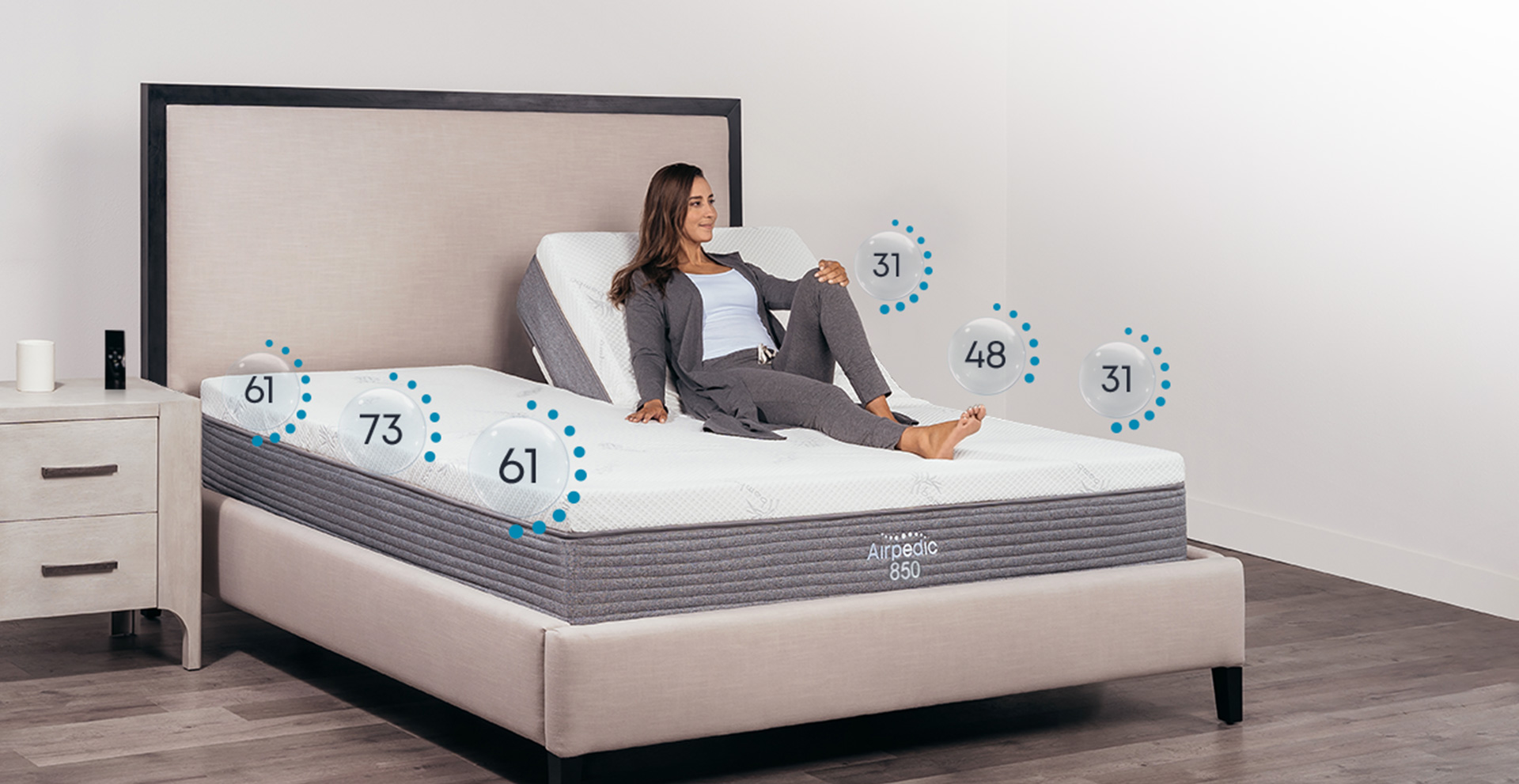
Airpedic mattresses feature a 6-zone, multi-chamber adjustable air system that provides targeted support where your body needs it most. This design allows you to adjust firmness separately for your shoulders, lumbar region, and legs—eliminating the compromises required by single-chamber systems.
The lumbar zone is particularly important. Your lower back carries significant weight and is prone to strain when unsupported. With independent lumbar control, you can increase firmness precisely where your spine needs it while keeping other zones softer for pressure relief. This personalized lumbar support is essential for those with back pain and critical for maintaining the neutral alignment that enables deep sleep.
Dual-Side Adjustability for Couples
Couples often have different firmness preferences, and compromise typically means neither person sleeps optimally. Multi-zone technology solves this through dual-side adjustability, allowing each partner to customize their half of the mattress independently. With up to 84 individualized comfort settings, both sleepers can achieve proper alignment without affecting each other.
The multiple air chambers also provide natural motion isolation. When one partner moves, the disturbance stays localized rather than transferring across the entire mattress. This reduces nighttime awakenings caused by a partner’s movements, helping both sleepers maintain uninterrupted sleep cycles.
The Role of Adjustable Bed Bases for Deep, Restful Sleep
Mattress support extends beyond firmness and alignment. The position of your body during sleep also influences how effectively you enter and maintain deep sleep stages. Adjustable bed bases work with your mattress to create optimal sleep postures that address common sleep disruptors.
Zero Gravity Position
The Zero Gravity position, originally developed by NASA, elevates both your upper body and legs simultaneously. This distributes your weight more evenly, reducing pressure on your spine and joints while improving circulation. Many sleepers describe the sensation as weightless, and research supports its benefits for spinal decompression and muscle relaxation.
When joint pressure decreases and muscles fully relax, your body can transition into deeper sleep more easily. The reduced strain on your cardiovascular system also promotes the physiological calm necessary for slow-wave sleep.
Reducing Sleep Disruptors
Several common conditions prevent people from reaching deep sleep, and elevation can address many of them. Snoring and sleep apnea often result from airway collapse during sleep. Elevating the head by 30 to 45 degrees helps keep airways open, reducing both snoring and apnea symptoms. Many adjustable bases include pre-programmed “Quiet Sleep” settings designed specifically for this purpose.
Acid reflux and GERD also disrupt sleep by causing discomfort when stomach acid travels up the esophagus. Medical professionals often recommend elevating the head 6 to 8 inches, which uses gravity to keep acid where it belongs. For those with circulation issues or swelling, raising the feet promotes better blood flow and reduces discomfort that might otherwise cause nighttime awakenings.
Temperature Regulation and Deep Sleep
Your body temperature naturally drops as you prepare for sleep, and maintaining a cool sleep environment is essential for deep sleep. When you overheat, your body struggles to reach the lower temperatures associated with slow-wave sleep. The result is restlessness, tossing and turning, and fragmented sleep architecture.
Many mattress materials, particularly high-density memory foams, trap body heat. Without proper ventilation, this heat builds up throughout the night, creating increasingly uncomfortable conditions that prevent deep sleep.
Airpedic’s Cooling Technology
Airpedic addresses heat retention through its patented Passive Airflow Transfer System (U.S. Patent No. 7,334,280). Unlike mattresses that rely on superficial ventilation holes, this system creates complete circulation by combining surface openings with underlying channels. Body heat is actively moved away while cooler air circulates within the mattress.
This under-layer airflow provides cooling that standard foams cannot match. By maintaining an ideal sleep microclimate throughout the night, the system helps your body stay at the temperatures needed for deep, restorative sleep.
Building Better Sleep Through Better Support
The science is clear: deep sleep depends on minimizing physical disturbances. When your mattress keeps your spine properly aligned, eliminates pressure points, and maintains comfortable temperatures, your body can spend more time in the restorative stages that drive recovery and well-being.
Customizable support is key to achieving this. Multi-zone technology allows you to address your specific needs—whether that means extra lumbar support, softer shoulders, or independent firmness for you and your partner. Combined with adjustable bed bases that reduce snoring, reflux, and circulation issues, and cooling systems that prevent overheating, these features create an environment optimized for deep sleep.
If you are struggling with sleep quality, restless nights, or morning pain, consider whether your current mattress truly supports your needs. Airpedic’s orthopedic, multi-zone sleep systems are designed specifically to maximize deep sleep through personalized support, proven cooling technology, and compatibility with adjustable bases. Better sleep is not about one-size-fits-all solutions—it is about finding the right support for your body.


Experience a new degree of personalized sleep.


Find the Airpedic® that’s just right for your sleep needs.

Buy with monthly payments.
Get an Airpedic Mattress starting as low as $84/mo
or interest-free.
Read More About Healthy Sleep
Finding your perfect mattress firmness isn’t guesswork—it’s science. Whether you’re a side sleeper seeking pressure relief or a back sleeper needing lumbar support, understanding how to optimize your sleep surface can transform your nights and energize your days. This comprehensive guide reveals how advanced multi-zone adjustable air technology delivers personalized…

You slept for eight hours, yet you woke up exhausted. Sound familiar? That frustrating disconnect between time in bed and how rested you feel comes down to one thing: sleep quality. In this guide, we break down exactly what sleep quality means, why it matters for your health, and how…
View More
Call one of our sleep experts to place an order.
Business Hours
- Monday - Friday 8:00am - 6:00pm PST
- Saturday - Sunday 10:00am - 6:00pm PST