



Multi-Chamber vs. Dual-Zone Mattresses: Why More Chambers Mean Better Support
If you’ve been shopping for an adjustable air mattress, you’ve likely encountered two design approaches: multi-chamber systems and dual-zone configurations. While both promise personalized comfort and better sleep, the difference in how they support your body is significant—and understanding that difference could be the key to finally getting the restorative rest you deserve.
At Air-Pedic, we’ve spent years engineering mattresses that address the root causes of sleep discomfort. Our team works alongside sleep specialists and chiropractors to develop systems that deliver real, measurable improvements in spinal alignment and pressure relief. In this comprehensive guide, we’ll break down exactly how multi-chamber and dual-zone mattresses differ, explore the pros and cons of each approach, and help you determine which design is right for your body type, sleeping position, and specific comfort needs.
Featured products
-

Airpedic® 500
Select OptionsPrice range: $2,499 through $4,348 -
Airpedic® 600
Select OptionsPrice range: $3,199 through $5,348 -
Airpedic® 650
Select OptionsPrice range: $1,649 through $2,649 -
Airpedic® 700
Select OptionsPrice range: $3,599 through $6,348 -
Airpedic® 800
Select OptionsPrice range: $4,599 through $7,948

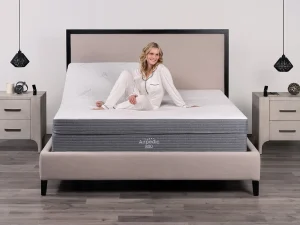
What Is a Multi-Chamber Mattress?
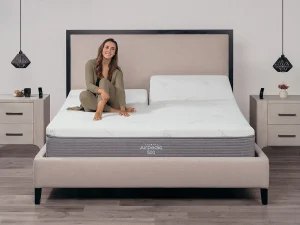
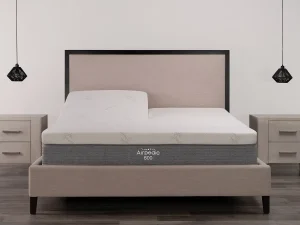
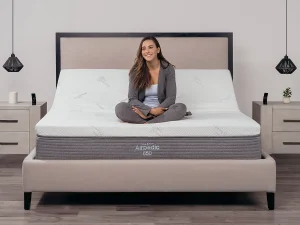
A multi-chamber mattress features multiple independent air compartments positioned beneath different zones of your body. Rather than treating your entire sleep surface as one uniform unit, these mattresses recognize a fundamental truth about human anatomy: your shoulders, lumbar region, and hips require vastly different levels of support to maintain proper spinal alignment throughout the night.
How Multiple Internal Air Chambers Support Different Body Zones
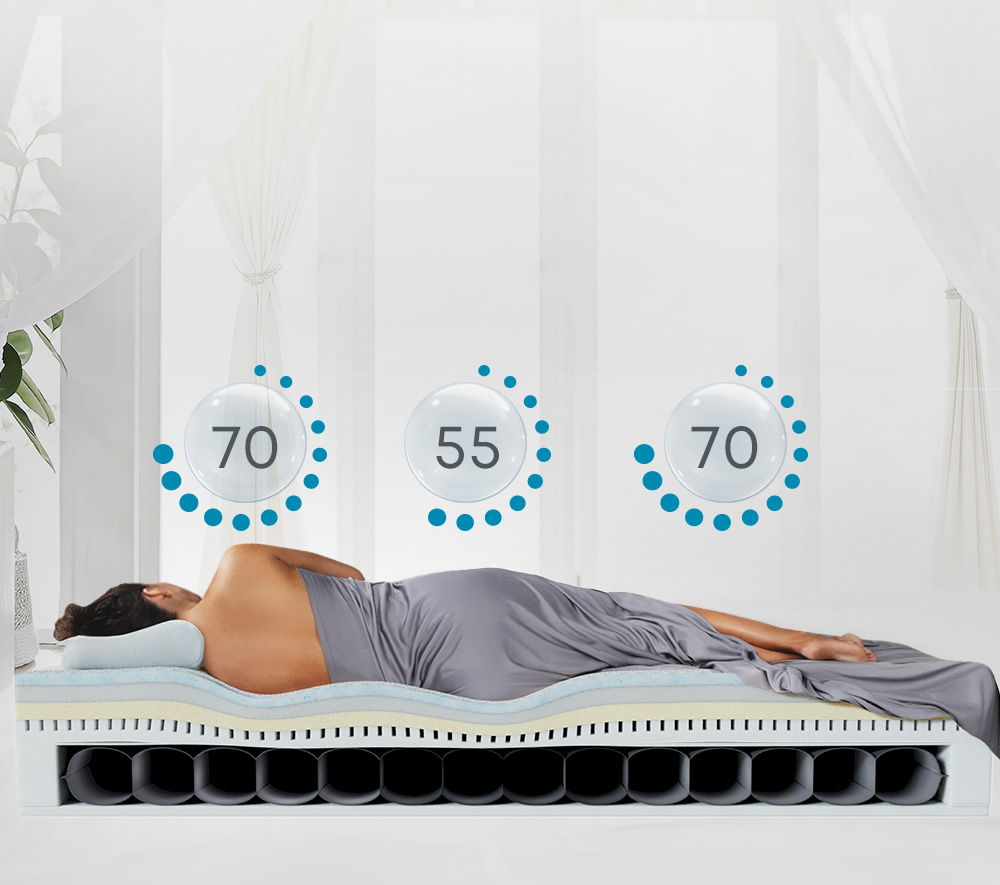
Consider how your body is shaped when you lie down. Your shoulders are broad and need some give to prevent pressure buildup that leads to numbness and discomfort. Your midsection—particularly your lumbar spine—naturally curves inward and tends to sink without adequate support, creating strain on the lower back muscles. Your hips carry significant weight and require firm, responsive cushioning to stay properly aligned with the rest of your spine.
A multi-chamber air mattress addresses each of these areas independently. Each chamber can be adjusted to a specific firmness level, allowing you to create a customized support profile that matches your unique body contours and preferred sleeping position. For side sleepers, this might mean softer shoulders to accommodate the natural curve of the body and firmer hips to prevent sinking. For back sleepers, it often translates to increased lumbar support while keeping the upper and lower sections slightly softer for comfort.
This targeted approach prevents what sleep experts call the “hammock effect”—that frustrating sagging sensation in the middle of the bed that plagues many traditional mattresses, memory foam mattresses, and single-chamber air beds. When your midsection sinks while your head and feet remain elevated, your spine curves unnaturally, leading to morning stiffness, back pain, and poor sleep quality.
How Air-Pedic’s Multi-Chamber System Works
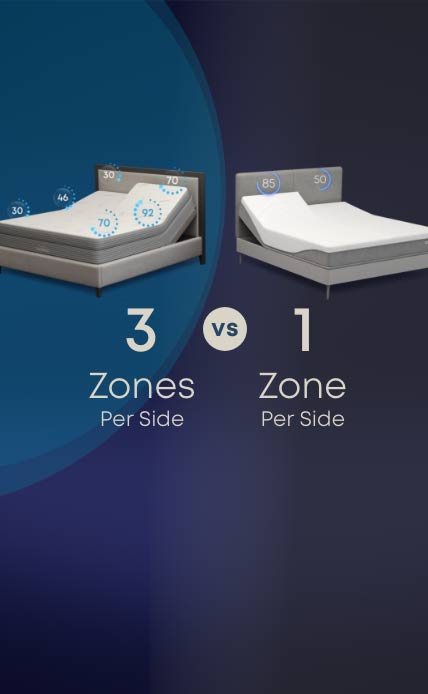
It’s worth noting that not all “multi-chamber” mattresses deliver the same level of support. Many brands that advertise multi-chamber technology actually provide only one air chamber per side of the bed—which simply means two people can choose different overall firmness levels, but neither person gets true zoned support for different areas of their body. This is essentially a dual-zone mattress marketed under a different name.
Air-Pedic mattresses utilize a proprietary Tri-Zone design that divides each side of the bed into three distinct chambers: one for the shoulders, one for the lumbar region, and one for the hips and legs. Each zone operates completely independently, allowing sleepers to fine-tune firmness precisely where they need it most—giving each person true customized support across their entire body, not just a single firmness setting.
This isn’t just theoretical engineering—it’s grounded in spinal health science. Chiropractors and orthopedic specialists have consistently endorsed zoned support systems because they align with how the human spine naturally curves. When your lumbar region receives dedicated support separate from your shoulders and hips, it dramatically reduces strain on the lower back—one of the most common sources of sleep-related discomfort and a primary reason people wake up feeling worse than when they went to bed.
The result is a mattress that adapts to your body rather than forcing your body to adapt to it. Whether you’re a stomach sleeper who needs a relatively flat surface, a side sleeper who requires significant pressure relief, or a combination sleeper whose needs shift throughout the night, the multi-chamber system responds accordingly.
Pros and Cons of a Multi-Chamber Mattress
Benefits of Multi-Chamber Design
The primary advantage of a multi-chamber mattress is targeted lumbar support. Because the midsection chamber operates independently from the rest of the bed, it can be set firmer than surrounding zones to prevent your lower back from sinking. This directly addresses the hammock effect that causes so many people to wake up with stiffness, aching muscles, and persistent pain that follows them throughout the day.
Customization is another major benefit that sets multi-chamber designs apart. Different body types require different support configurations. Whether you’re a stomach sleeper who needs a flatter, more uniform surface to prevent lower back hyperextension, a side sleeper who requires pressure relief at the shoulders and hips, or a combination sleeper whose needs shift throughout the night, a multi-chamber system can be adjusted to accommodate each scenario. The level of mattress firmness control goes far beyond what any standard foam mattress, latex mattress, innerspring mattress, or hybrid mattress can offer.
Heavier sleepers, in particular, benefit enormously from this design. Body weight doesn’t distribute evenly—it concentrates around the hips and midsection. A multi-chamber mattress allows for increased support in these high-pressure areas while maintaining appropriate give elsewhere. This prevents the excessive sinking that heavier individuals often experience with traditional mattress types.
For couples with different sleep preferences, multi-chamber beds offer an additional layer of personalized comfort that goes beyond what a dual comfort mattress provides. Each partner can adjust their side of the bed independently, and within that side, they can further customize each zone. This means two people with completely different body types and comfort preferences can share a queen bed or split king mattress without compromise.
Potential Drawbacks to Consider
Multi-chamber mattresses typically come with a higher price point than simpler designs. The additional engineering, materials, air pumps, and independent controls required to manage multiple zones add to the overall manufacturing cost and, consequently, the retail price. For budget-conscious shoppers, this investment needs to be weighed carefully against the potential health and comfort benefits—though many find the improvement in sleep quality justifies the expense.
There’s also a learning curve to consider. With more adjustment options comes added complexity during initial setup. Some users may need guidance to find their ideal settings and understand how changes to one zone affect overall comfort. However, most manufacturers, including Air-Pedic, provide detailed support resources and customer service to help customers dial in their preferences quickly and confidently.
What Is a Dual-Zone Mattress?
A dual-zone mattress divides the sleep surface into two separate sides, typically left and right. Each side contains a single air chamber, allowing two sleepers to set different firmness levels for their respective halves of the bed. This design has become popular among mainstream adjustable air mattress brands as a straightforward solution for couples with different sleep preferences who want dual firmness without excessive complexity.
How Dual-Zone Firmness Works
In a dual-zone configuration, firmness is controlled on a side-by-side basis. If one partner prefers a softer, more plush feel and the other wants something firmer and more supportive, each can adjust their chamber accordingly without affecting the other person’s sleep surface. This makes dual-zone mattresses an appealing choice for couples who have experienced the frustration of compromising on a single mattress firmness that leaves neither person truly comfortable.
This design is especially common in split king mattress configurations, where two Twin XL mattresses are placed side by side within a shared frame. Each sleeper essentially has their own independent mattress with their own controls, eliminating the need to find a middle-ground firmness that satisfies neither person. The split king setup also pairs well with an adjustable bed frame, where each side can be raised or lowered independently for reading, watching television, or addressing specific health needs like acid reflux.
Common Use Cases for Dual-Zone Beds
Dual-zone mattresses work well for couples whose primary concern is having different overall firmness preferences. If one person weighs significantly more than the other, or if one prefers the plush, contouring feel of a best memory foam mattress while the other wants something closer to the responsive bounce of an innerspring mattress, the dual-zone approach offers a practical middle ground.
They’re also popular among those prioritizing simplicity and ease of use. With just two settings to manage—one for each side—there’s less to think about and fewer adjustments to make. For couples who simply want to end the firmness debate without getting into the details of zone-by-zone customization, dual-zone mattresses provide a clean, uncomplicated solution.
Pros and Cons of a Dual-Zone Mattress
Advantages of Dual-Zone Design
Simplicity is the hallmark of dual-zone mattresses. With just two chambers to manage, setup is straightforward and adjustments are intuitive. Most users can find their preferred firmness quickly without navigating a complicated calibration process or spending time fine-tuning multiple zones. This accessibility makes dual-zone designs particularly attractive to shoppers who want adjustability without complexity.
Affordability is another significant advantage worth considering. Because dual-zone systems require fewer components, less sophisticated engineering, and simpler control mechanisms, they tend to cost less than their multi-chamber counterparts. For shoppers prioritizing budget while still wanting some level of firmness adjustability and the ability to accommodate different sleep preferences, dual-zone mattresses offer a reasonable entry point into the adjustable air mattress category.
Limitations of Dual-Zone Mattresses
The primary limitation of dual-zone design is the lack of targeted support within each side of the bed. Because each half contains only one air chamber, firmness is uniform from your shoulders down to your feet. This means the mattress cannot address the different support needs of your lumbar region versus your shoulders or hips—your entire body experiences the same level of firmness regardless of where support is actually needed.
As a result, the hammock effect remains a genuine concern with dual-zone designs. Without independent lumbar support, heavier midsections can still sink into the mattress, pulling the spine out of its natural alignment. For sleepers with chronic back pain, joint issues, or those who simply need more precise, anatomically-targeted support, this uniform firmness approach can be a significant drawback that undermines overall sleep quality despite the adjustability features.
Multi-Chamber vs. Dual-Zone Mattress: A Direct Comparison
Support and Spinal Alignment
When it comes to spinal alignment—arguably the most important factor in determining whether a mattress promotes restful, restorative sleep—multi-chamber mattresses have a clear and measurable advantage. By providing zoned, body-specific support, they can maintain proper spinal curvature regardless of your sleeping position. The lumbar region stays adequately supported, the shoulders get appropriate give to prevent pressure buildup, and the hips receive targeted cushioning to prevent sinking.
Dual-zone mattresses, by contrast, offer only side-to-side firmness control. While this effectively solves the problem of different firmness preferences between partners, it doesn’t address how support is distributed across your own body. If you struggle with back pain, wake up feeling stiff, or find that your current mattress leaves you more tired than when you went to bed, a dual-zone design may not provide the relief you’re seeking—even with significant firmness adjustments.
Customization and Ideal Sleeper Types
Multi-chamber mattresses are ideal for heavier sleepers who need robust support in high-weight areas, pain-sensitive individuals who require precise pressure relief, and anyone who hasn’t found lasting comfort with standard mattress types. The ability to adjust each zone independently means the mattress can evolve with your changing needs—whether those changes result from injury recovery, weight fluctuation, pregnancy, aging, or simply discovering a new preferred sleeping position over time.
Dual-zone mattresses are better suited for couples whose main priority is having different overall firmness settings without additional complexity. If both partners are generally comfortable with uniform support across their individual bodies and simply want the freedom to choose their own soft versus firm preference independently, a dual-zone configuration may be entirely sufficient for their needs.
Sleep Quality and Long-Term Comfort
Sleep quality ultimately comes down to how well your mattress supports truly restorative rest night after night. Mattresses that reduce pressure points, maintain proper spinal alignment, and adapt to your body’s unique requirements tend to deliver better sleep outcomes over time. Multi-chamber systems, with their targeted, zone-specific support, are engineered specifically for this purpose—addressing the anatomical reality that different parts of your body require different levels of firmness.
For hot sleepers concerned about temperature regulation and finding the best cooling mattress solution, both multi-chamber and dual-zone air mattresses offer natural breathability advantages that outperform many foam mattresses and hybrid mattresses. Air circulates through the chambers naturally, helping dissipate body heat and maintain a comfortable sleeping temperature throughout the night without the heat retention issues common with dense memory foam.
Conclusion
When comparing multi-chamber and dual-zone mattresses, the fundamental difference lies in how support is distributed. Dual-zone designs divide the bed by side, effectively solving the common problem of different firmness preferences between partners sharing a bed. Multi-chamber designs go significantly further, dividing each side of the bed into distinct zones that correspond directly to your body’s anatomy and varying support requirements.
For sleepers dealing with chronic back pain, those who carry more weight in their midsection, or anyone who has struggled for years to find the right mattress firmness despite trying foam mattresses, hybrid mattresses, latex mattresses, and traditional innerspring options, a multi-chamber system offers a level of customization that dual-zone mattresses simply cannot match. The internal chamber design matters more than overall firmness—because it’s not just about how soft or firm your mattress feels on the surface, but about how precisely it supports each distinct part of your body.Ready to experience the difference that zoned support can make for your sleep quality and overall wellbeing? Explore Air-Pedic’s multi-chamber mattress collection and discover how our Tri-Zone technology can transform the way you sleep. Or, learn more about our multi-chamber design philosophy to understand why more chambers truly mean better, more personalized support for every body type and sleeping position.


Experience a new degree of personalized sleep.


Find the Airpedic® that’s just right for your sleep needs.

Buy with monthly payments.
Get an Airpedic Mattress starting as low as $84/mo
or interest-free.
Read More About Healthy Sleep
If you’ve been researching adjustable mattresses, you’ve probably come across the term “multi chamber” and wondered what makes this design different from a standard air mattress or traditional mattress. Understanding how multi chamber technology works can help you make a smarter bed choice—especially if you’re dealing with back pain, sharing…

You went to bed feeling fine, but you woke up stiff, sore, and achy. Sound familiar? This frustrating experience has a name: sleep pain. And for millions of people, it is a nightly occurrence that erodes sleep quality and daytime well-being. In this article, you will learn exactly what sleep…
View More
Call one of our sleep experts to place an order.
Business Hours
- Monday - Friday 8:00am - 6:00pm PST
- Saturday - Sunday 10:00am - 6:00pm PST